An EdTech platform recorded 90,400 landing-page visits over 4 months but achieved only 436 confirmed payments, resulting in a conversion rate of approximately 0.5%. The challenge was to identify why so few visitors progressed from browsing courses to purchasing them, and to suggest data‑driven interventions.
EdTech Platform Transactional logs captured from January-April, 2015.
Findings
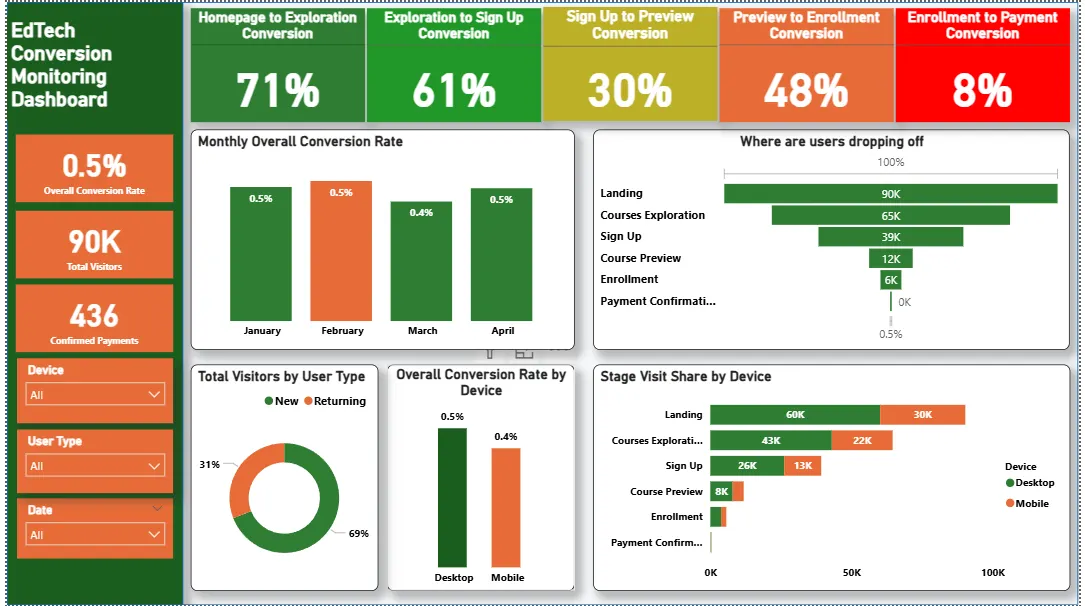
EdTech Conversion Monitoring Dashboard
Mapping the user journey into six stages – Landing, Exploration, Sign‑Up, Preview, Enrollment and Payment – revealed sharp drop‑offs:
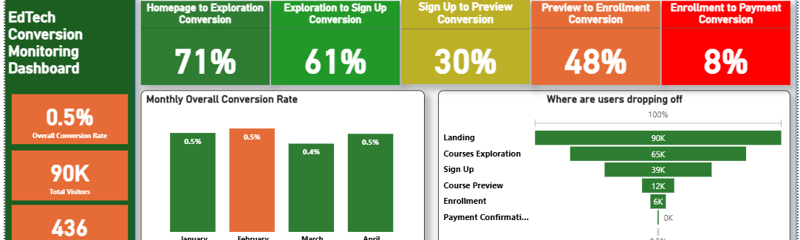
- About 71% of visitors moved from the landing page to course exploration, and 61% from exploration to sign-up.
- Only ≈approximately 30% of those who reached the sign-up stage progressed to preview the courses, and just 8% of enrolled users completed payment.
- The analysis showed that 69% of visitors were new and 31% returning; desktop users converted slightly better (0.51%) than mobile users (0.43%)
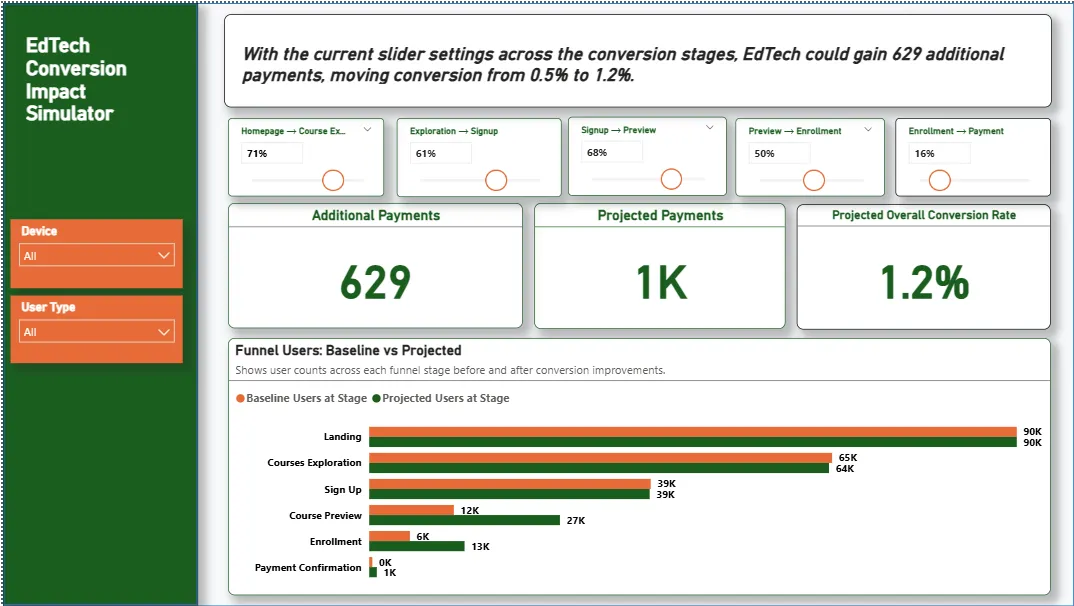
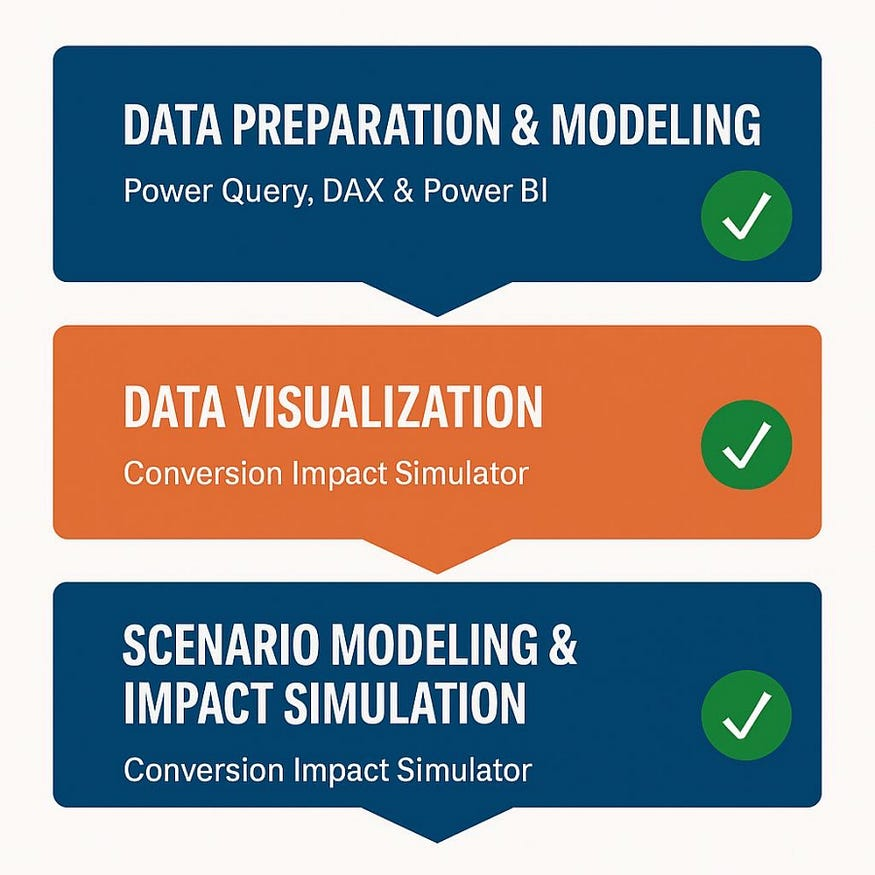
EdTech Conversion Impact Simulator
The Conversion Impact Simulator predicted that improving the sign-up and payment stages could more than double total payments, raising the overall conversion rate from 0.5% to approximately 1.2%.
Recommendations
1. Prioritise the Sign-Up Flow
The platform should prioritise improvements in the sign-up flow. The data showed that a significant drop-off occurs when users are asked to create an account, with less than one in three continuing to the preview stage. Simplifying this process through options such as social logins, fewer required fields, or a cleaner user interface would reduce friction. Introducing small sign-up incentives, such as a free trial or a discount, could also encourage more users to proceed to the course preview.
2. Fix Payment Friction
There is also a need to fix payment friction at the final stage of the funnel. Despite reaching enrollment, only about 8% of users complete payment, indicating significant barriers at checkout. Optimising the payment experience for mobile devices, reducing the number of steps, and offering multiple payment methods (such as digital wallets or local options) would directly improve conversions. Adding trust signals, such as secure payment badges and testimonials, would further reassure users and lower abandonment rates.
3. Leverage the Simulator for Ongoing Strategy
The Conversion Impact Simulator should be leveraged as a strategic tool, not just a one-off analysis. By using the What-If sliders to model realistic improvements, teams can set quarterly conversion targets and measure their progress against these targets. This ensures that marketing and product decisions are guided by the funnel stages that offer the most significant leverage, rather than focusing solely on driving more site traffic. In this way, the simulator becomes a living framework for continuous optimisation.
4. Focus on Retention and Quality Users
Ultimately, the platform should prioritise retention and attract high-quality users. While traffic growth remains essential, the bigger opportunity lies in converting the right users into paying learners who are likely to complete courses and remain engaged in the long term. Prioritising retention strategies, personalising the learning journey, and targeting users with a higher likelihood of payment will generate more sustainable growth than simply increasing visitor numbers.
CONCLUSION
The Conversion Impact Simulator reveals that the real opportunity for growth lies not only in attracting more visitors, but also in strengthening the weak points in the user journey. By focusing on high-friction stages, such as Sign-Up → Preview. EdTech can realistically double the number of confirmed payments. This shifts the focus from “get me more users” to “convert more of the right users into paying learners, which is a much more sustainable growth strategy for an EdTech platform.