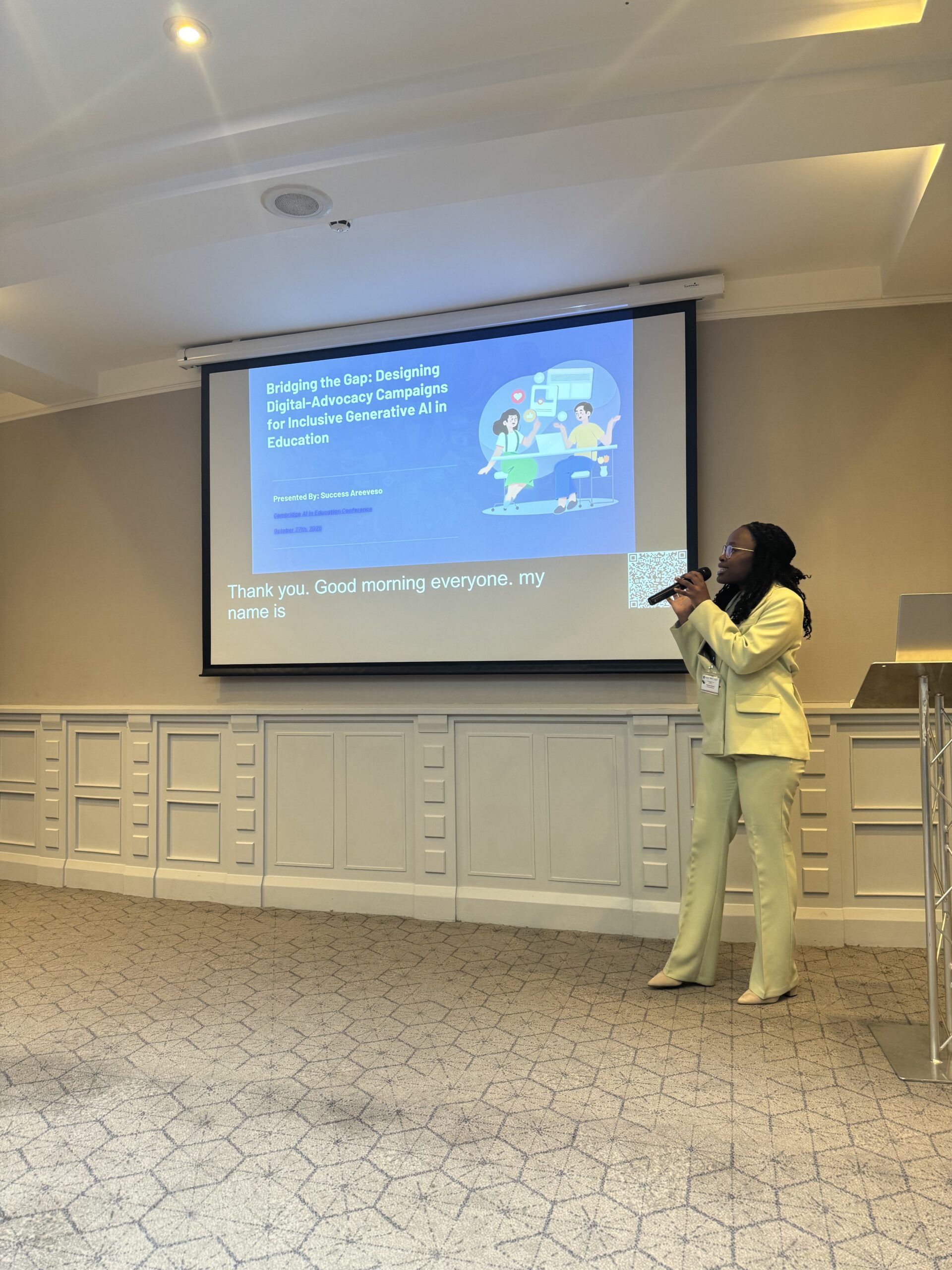
Presenter: Cambridge Generative AI in Education Conference
Designing Digital Advocacy Campaigns for Inclusive Generative AI in Education
My abstract was accepted for the Cambridge Generative AI in Education Conference, where I presented on designing digital advocacy campaigns for inclusive generative AI in education.
In my session, I focused on how we can use the resources we already have to inspire people to take action. I described advocacy as a series of actions that lead to change, whether that is influencing policies, signing petitions, changing laws or shifting what is considered normal. With new technologies moving so quickly, it is important that our messages and projects meet people where they are.
I also spent time demystifying some of the myths around advocacy. Advocacy is not only about protests. It can also look like using creative tools such as storytelling, strategy and project management to move people to act. I reminded participants that you do not need years of experience to start an advocacy campaign. You can begin from where you are right now and turn your existing projects into insights that inspire change.
What Digital Advocacy Campaigns Mean To Me
In the next part of the session, I shared what digital advocacy campaigns are and how they work in practice. For me, digital advocacy means using media and online platforms for change. This includes platforms such as Facebook, LinkedIn, Instagram, TikTok, Substack, YouTube, Medium, X, WhatsApp messaging and podcasts.
I gave examples of campaigns I have contributed to and led with YouthxYouth, including:
- A six-part storytelling series to raise funds for the Unleash the Power Within YOUth campaign
- The Big Education Conversation, which asks a simple but powerful question: What is the purpose of education?
- Theirworld’s Act for Early Years campaign, which focuses on early childhood development
I emphasised that digital advocacy campaigns are not one-off events. They are a series of actions that unfold over time, guided by a clear purpose and consistent communication.
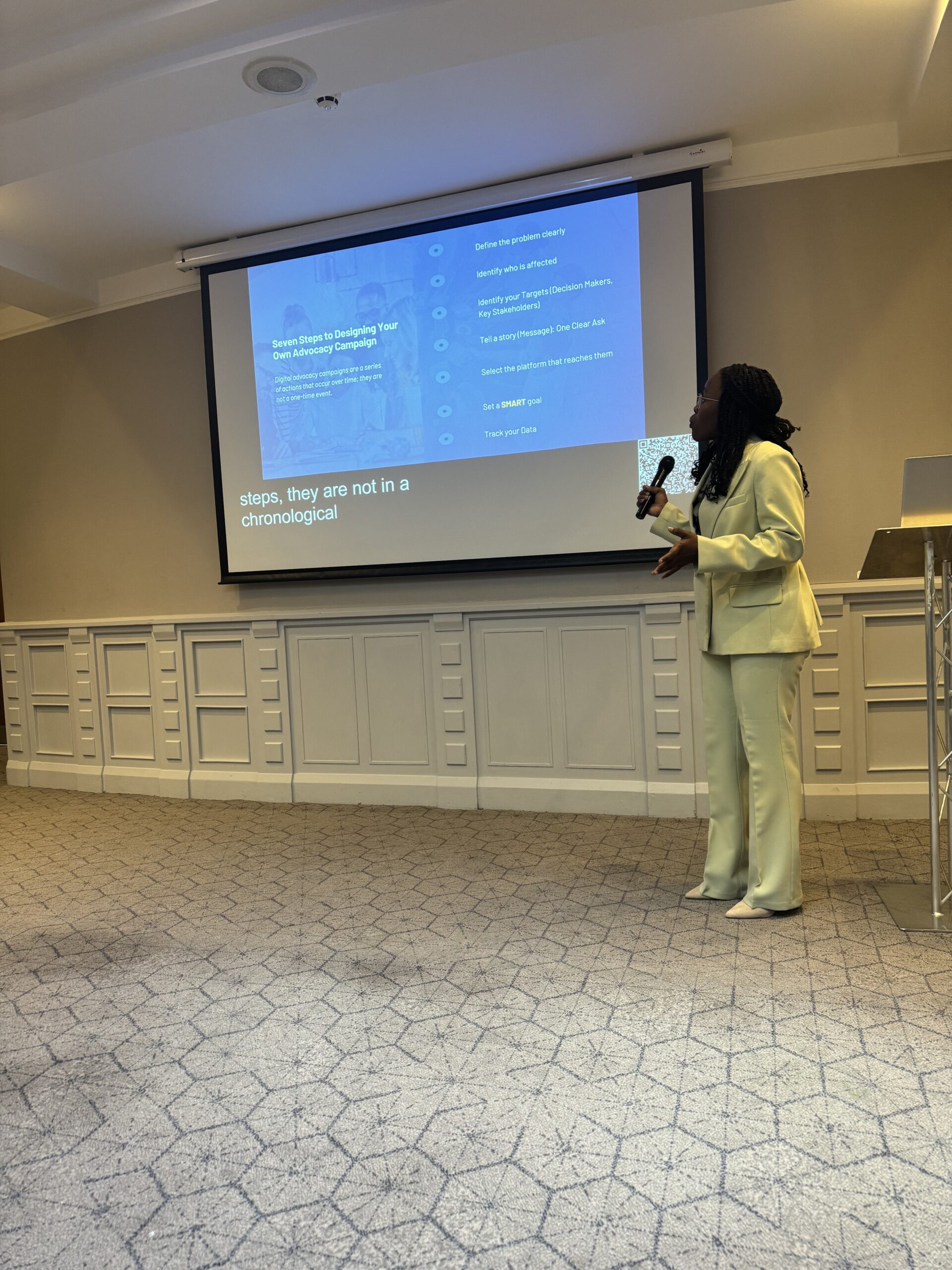
Seven Steps To Designing Your Own Advocacy Campaign
I then shared a simple structure that anyone can adapt when designing a campaign:
- Define the problem clearly
- Identify who is affected
- Select the platforms that reach them
- Identify your targets (decision makers and key stakeholders)
- Tell a clear and compelling story
- Set a SMART goal
- Track your data and learn from it
We wrapped up with a short group activity session where participants identified problems they care about and began sketching ideas for their own digital advocacy campaigns. I received encouraging feedback about how engaged the audience was during my session.
During the conference, I was also invited to join another panel session on the third day, where I shared my perspective on the geopolitical challenges to the inclusive and equitable development of generative AI in education. That conversation reinforced why inclusive, people-centred approaches to technology, storytelling and advocacy matter so much to me.
What Has Happened Since The Conference
After the conference, I built the website you are reading this post on, www.successareeveso.com. I created a Digital Advocacy Campaign Toolkit for Inclusive Practices in Generative AI in Education, which includes templates, a worksheet and a no-code AI app built with Amazon AWS Party Rock.
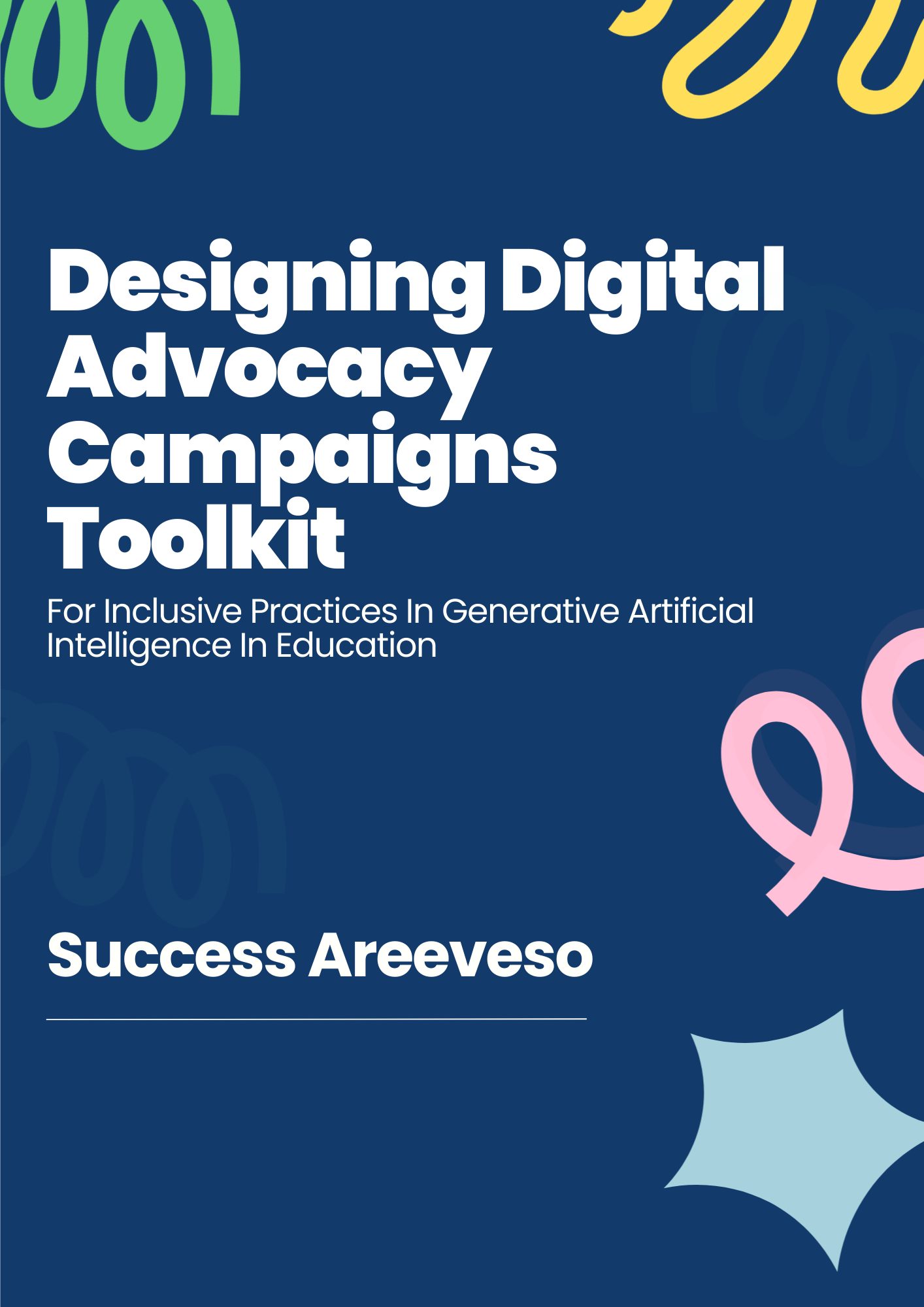
I created this toolkit after my presentation at the Cambridge Generative AI in Education Conference (27–29 October 2025) because I kept hearing the same need: people don’t just want to be told that generative AI is changing education. They want practical ways to shape how these tools are created and used, so change happens with communities, not to them.
Designing Digital Advocacy Campaigns for Inclusive Practices in Generative AI in Education is a step-by-step guide for turning concern into action. It helps young people, educators, institutions, and communities build inclusive, realistic digital advocacy campaigns without needing a big budget or a large team. The toolkit centres three core inclusion priorities: Access, Bias, and AI Literacy, and it uses a straightforward seven-step campaign-building process that takes you from defining the problem and who it affects, to identifying your audience, choosing platforms, shaping your story, setting a SMART goal, and tracking progress.
To make the toolkit even more usable, I also created a companion no-code AI campaign builder app that guides users through the same seven steps and generates a campaign plan and a first draft of a social media post. Together, the toolkit and app support a conversation-driven, accessible, and grounded-in-real-educational-contexts advocacy, helping people start small, iterate quickly, and build momentum toward more inclusive, generative AI practices in education.