Business Overview/Problem
VeezyEats is a pioneering force in the competitive urban food delivery sector, dedicated to redefining the delivery experience for city residents. With a strong presence in densely populated urban areas across multiple cities, VeezyEats has established itself as a trusted name in the food delivery industry. Their mission is to provide convenient, reliable, and efficient delivery services tailored to the unique needs of urban dwellers, underpinned by a commitment to customer-centric excellence, operational efficiency, sustainability, and market leadership.
Veezy Eats is facing several pressing challenges: extended delivery times are eroding customer satisfaction, inefficient routing is increasing operating costs, estimated arrival times are often inaccurate and frustrating to users, and high driver turnover reflects the strain of demanding working conditions. Addressing these issues requires implementing a robust route-optimisation solution that shortens delivery journeys, reduces costs, improves ETA accuracy, and eases couriers’ workload.
These numbers matter because Veezy Eats wants to satisfy its customers, use shorter routes, keep drivers content, and stay friendly to the environment. The data tells us where things break down and how to address the issues.
Data Insights
These patterns were identified by cleaning data from customer orders, drivers, restaurants, and traffic records in SQL, and then analysing simple charts in Power BI.
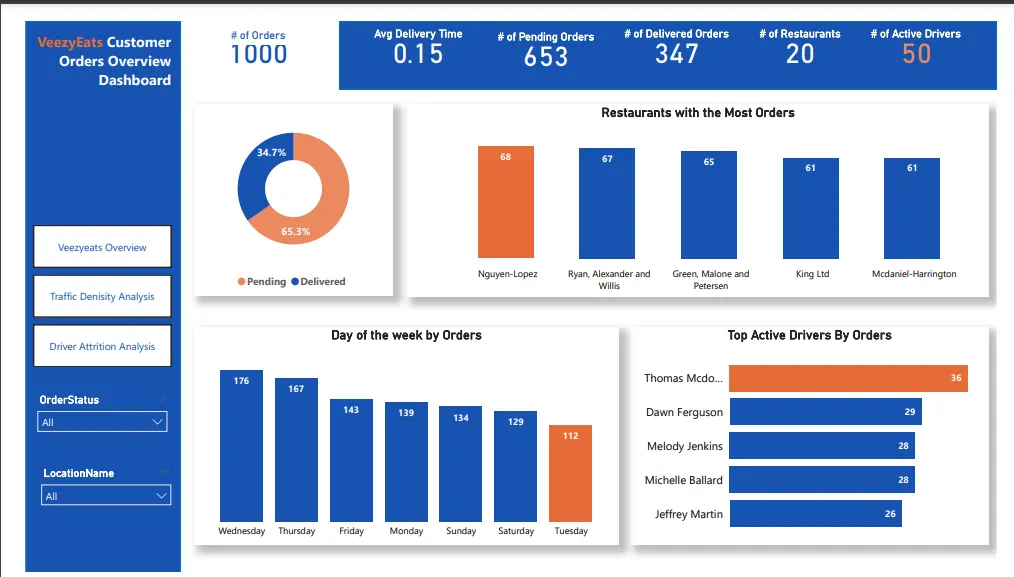
- The backlog is increasing: Two out of every three orders remain in “pending” status; the food is prepared, but still awaiting a driver. This indicates that demand exceeds the capacity of Veezy Eats drivers, resulting in customer wait times.
- Mid-week Surge: Wednesday is the busiest day for orders. Order volume on that day runs about 15 per cent higher than the weekly average and nearly 20 per cent higher than on the quietest day, Sunday. Extra drivers and tighter routing on Wednesdays could clear the queue faster and keep mid-week delays from expanding into lower customer ratings.
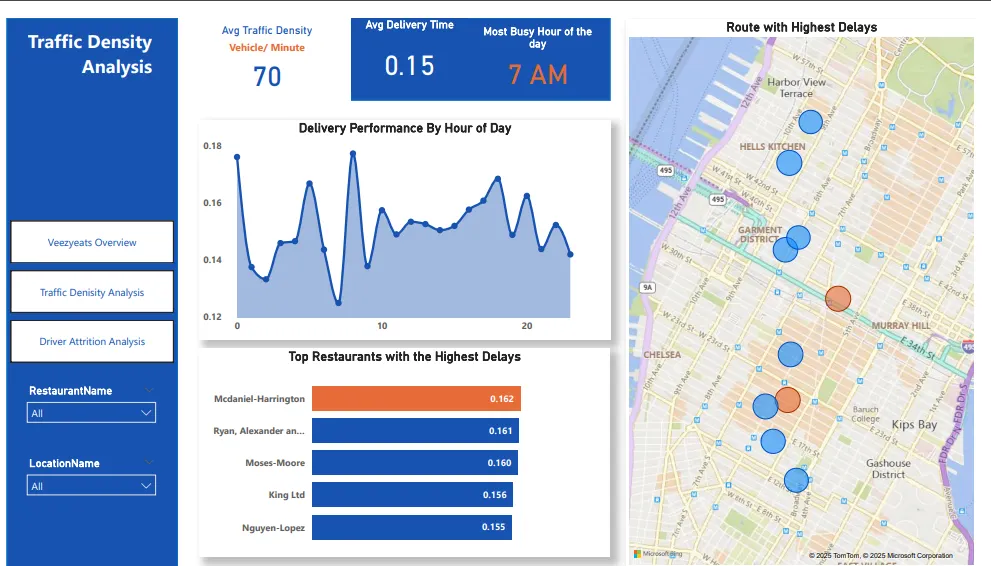
- Delivery time: Most delays occur during rush hour or when the restaurant is experiencing a slow period.
- Traffic varies significantly: Some blocks see only two cars a minute, while others see almost 200. Routes that ignore heavy traffic waste time and fuel.
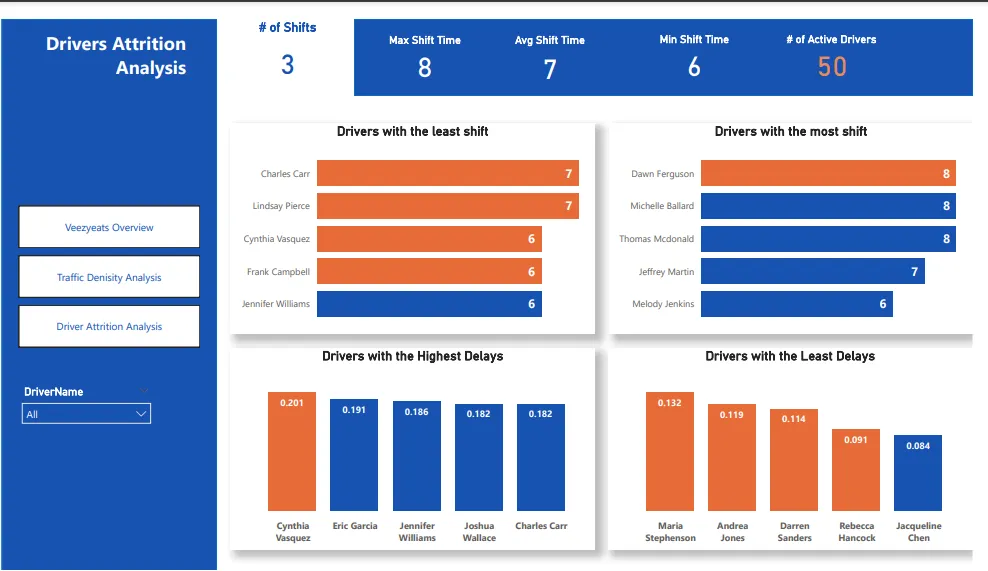
- Riders are stretched: Approximately fifty active couriers work six- to eight-hour shifts. The busiest ones take up to eight shifts each week and often run late because they are tired.
- A few kitchens cause most delays: Five restaurants receive the most orders, and many of these take the longest to hand food to drivers, so most delays originate in the kitchen rather than on the road.
Recommendations: How to act on the findings
- Utilise live traffic data for routing: Connect the dispatch system to a real-time traffic feed to help drivers avoid congestion, save time, and lower fuel costs.
- Spread orders and shifts fairly: Track each driver’s on-time rate and hours worked, then assign jobs so no one is overloaded. Meet weekly with drivers who face frequent delays to hear their road-level tips and offer support.
- Sync pickups with the kitchen clock: Send a prompt to the driver when an order from a busy restaurant is nearly ready for collection. The rider can arrive just in time, avoid curbside waiting, and hand off the food hot.
- Add pop-up hubs near dense neighbourhoods: During rush hours, stage meals at small hubs closer to customers. Shorter last-mile trips reduce costs and decrease the pending queue.
- Reward streaks of fast drops: Offer small bonuses or badges for clusters of sub-ten-minute deliveries to turn punctuality into friendly competition and keep morale high.
- Boost driver capacity during peak times: Hire part-time couriers or adjust schedules to ensure more riders are on the road when order volume spikes, thereby reducing the share of meals stuck in pending status.
Conclusion
Veezy Eats can adopt these steps to reduce delivery times by approximately twenty per cent, lower costs by fifteen per cent, boost driver morale, and cut emissions. Most importantly, customers will receive hot meals within the guaranteed timeframe, which promotes repeat orders.