“Should generative AI be banned in schools because students aren’t learning?” I hear this question a lot. Honestly, I think we’ve moved past the “Ban it” stage. Banning rarely stops use; it just drives it underground. We need to figure out how to utilise AI for the greater good.
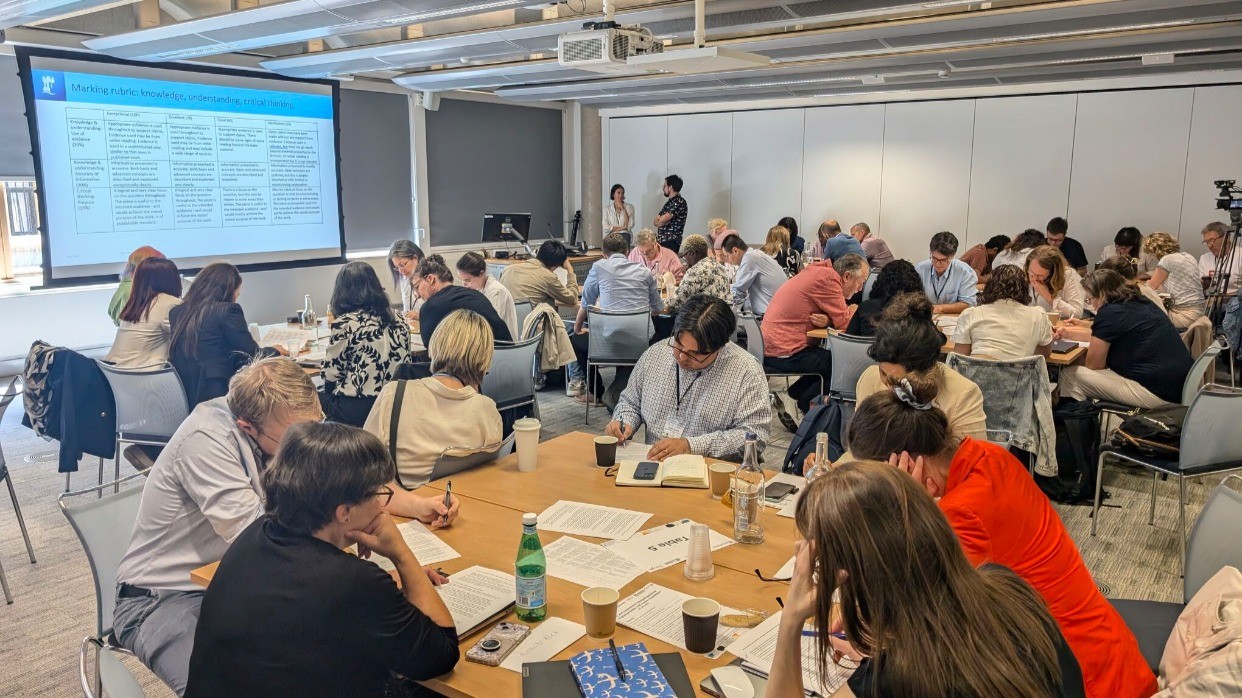
I was excited to spend June 23, 2025, with the AI and education community at Cambridge University Press & Assessment for a one-day event: “AI and Assessment: Navigating Ethical Implementations and Future Possibilities.” The mix of industry practice and academic research sessions was refreshing. Here are my key takeaways, grouped into four themes.
1. Start with the purpose of assessment
One session that stood out, led by Carla P. and Jing Xu on ethical AI in language assessment, highlighted simple questions about designing assessments: “What is this assessment meant to achieve? What skills should students gain?”
If we can’t answer that, any tool (AI or not) is a distraction. Poorly framed assessments can negatively impact learning and hinder creativity. Clear intention helps us decide where AI adds value and where it shouldn’t. When an assessment is well-designed, students can engage actively and learn effectively.
2. Build with users, not for them
Do we need another shiny AI tool? Maybe. But first: ask the people who will use it. I enjoyed the session on Navigating generative AI & Assessment by Steve Watson
We need to fund and prioritise participatory research with students, teachers, lecturers, exam designers, and everyone involved in AI and assessment. Furthermore, co-designing surfaces real needs (and constraints) instead of forcing solutions onto classrooms. Often, the tools exist; what’s missing is support on how to use them better.
3. Challenges & practical responses
a. “Students aren’t learning”: AI should enhance learning, not substitute it. We should safeguard foundational skills, including basic mathematics and English writing, speaking, and reading skills, while also instructing students on how to collaborate with AI.
b. Data & consent: Predictive analytics can flag students at risk, but whose data is it? If their work is used to train an AI system, students (and their parents/guardians for minors) should be asked for informed consent.
c. Clarity, accountability, transparency: If AI is allowed in assessments, spell it out:
- What generative AI tools are permitted?
- What kind of help is acceptable?
- Require students to submit a short “AI use statement” describing what they asked their selected generative AI tool and how they used the outputs. Educators can also take a step further and ask students to critique the responses from these tools and explain why.
d. Bias: Generative AI models reflect their training data, which can disadvantage some students. Equity checks are non-negotiable.
4. Digital inequality is more than “access to tools”
We often frame digital inequality as “who has AI and who doesn’t.” I believe it’s deeper:
- Training quality & context: A student from a well-resourced school is coached to prompt well; another may never get that guidance.
- Infrastructure and policy differences: Some countries or institutions embrace AI for assessment, while others forbid it. The result? Unequal preparation for the same future.
Using AI “for good” means ensuring that teachers and students have the training and supportive policies necessary to use it in an ethical, responsible, and effective manner.
Conclusion
We closed the day in groups, working through a case study focused on Anticipatory Ethics: I remember reflecting on a key question, “If this AI tool were used in 2040, what could go wrong and how would we fix it?” That collaborative imagination session was my favourite. It moved us from theory to practice, through brainstorming, proposing solutions and working in teams.
We’ve spent much energy arguing about bans. I am more interested in design, Purpose-led assessment, Real participation, Consent, Bias checks, and Human judgment in using AI in Education.
If you’re using or resisting AI in assessment, I’m curious: How are you (or your institution) approaching AI in assessment right now? I’d love to hear examples, including successes and failures. What’s working for you? What’s not?
Thank you to the AI & Education Community, Cambridge University Press & Assessment , and Imogen Casebourne (DPhil) co-founders Megan Ennion Inbar Bobrovsky and the incredible facilitators and speakers for organising and inviting me. The day genuinely stretched my thinking. I had a great learning experience.
#AIinEducation #Assessment #EdTech #EthicalAI #HigherEd